01. Introduction and context
In an increasingly competitive market—where up to 70% of fitness app users abandon fitness products within the first 90 days—effective UX/UI design is not just an enhancement but a necessity for engagement and retention. The integration of AI further elevates expectations, enabling personalized workout plans, real-time feedback, and adaptive coaching that cater to individual needs and preferences
This report details the process of designing the UX/UI for a fitness app enhanced with AI features, highlighting the principles, methodologies, and best practices that drive user satisfaction and long-term engagement in the digital fitness landscape.
02. Market analysis
The landscape of fitness applications has evolved rapidly, yet many users still struggle to find platforms that provide comprehensive guidance and meaningful support. Traditional fitness apps often focus narrowly on tracking workouts or counting calories, leaving significant gaps in the holistic management of well-being. Recognizing these shortcomings, our team embarked on the design of a next-generation fitness app in autumn 2024, aiming to redefine user experience through the integration of advanced AI functionalities.
Our core motivation stemmed from two critical observations. First, existing fitness solutions frequently lack the depth of personalized guidance that users need to achieve sustainable results. Second, there is a growing demand for a holistic approach—one that seamlessly integrates data from multiple aspects of daily life, including nutrition, sleep, and exercise. By gathering and analyzing this multifaceted data, our app leverages AI to deliver tailored feedback, actionable insights, and adaptive recommendations, empowering users to make informed decisions and foster long-term healthy habits.
The project analysis, conducted during a period of unprecedented growth in AI technology, provided invaluable insights into the challenges and opportunities present in this dynamic field. Navigating the complexities of AI integration—especially as the technology rapidly advanced—was both a fascinating and essential learning experience. Our focus remained on designing a user interface and experience (UX/UI) that is not only intuitive and engaging, but also capable of translating sophisticated AI-driven analytics into clear, supportive guidance for users at every stage of their fitness journey.
By prioritizing user-centric design and holistic data integration, our fitness app aspires to set a new standard for digital health platforms, offering a level of personalized support and motivation that traditional apps have yet to achieve.
03. Understanding the user
To ensure our fitness app addressed real user needs, we conducted a targeted user survey as an early step in our design process. We crafted a concise, mobile-friendly questionnaire focusing on users’ current fitness habits, their motivations and challenges, and their experiences with existing fitness apps. The survey included a mix of multiple-choice and open-ended questions to gather both quantitative data and personal insights.
We distributed the survey through social media fitness groups, online forums, and our personal networks to reach a diverse audience ranging from fitness beginners to experienced athletes. Over the course of one week, we collected 120 responses. The results highlighted key pain points such as lack of personalization, difficulty maintaining motivation, and confusion around tracking progress. These insights directly informed our feature prioritization and the integration of AI-driven personalization within the app.
1. Progress Tracking and Guidance Are Essential
A large majority want clear progress tracking (85%) and guided workout plans (80%), indicating these should be core features. Users value knowing what to do and seeing their improvement.
2. Motivation and Time Management Are Major Challenges
The top challenges are staying motivated (30%) and finding time (26%). Features that boost motivation (reminders, streaks, gamification) and help users fit workouts into their schedules will address key pain points.
3. Personalization and Simplicity Drive Satisfaction
Users dislike complicated interfaces and lack of personalization. They seek easy-to-use, tailored experiences that adapt to their goals, fitness level, and preferences.
4. Most Users Are Experienced with Fitness Apps, But Want More
With 85% having used fitness apps, users are familiar with the basics but desire better integration, more personalized plans, and fewer ads or upsells. There’s an opportunity to stand out by focusing on user-centric design and value.
To succeed, the fitness app should prioritize intuitive progress tracking, personalized guidance, motivational tools, and a simple, user-friendly interface. Addressing motivation and time challenges will help users stay engaged and achieve their goals.
04. User Insights
The landscape of fitness applications has evolved rapidly, yet many users still struggle to find platforms that provide comprehensive guidance and meaningful support. Traditional fitness apps often focus narrowly on tracking workouts or counting calories, leaving significant gaps in the holistic management of well-being. Recognizing these shortcomings, our team embarked on the design of a next-generation fitness app in spring 2024, aiming to redefine user experience through the integration of advanced AI functionalities.
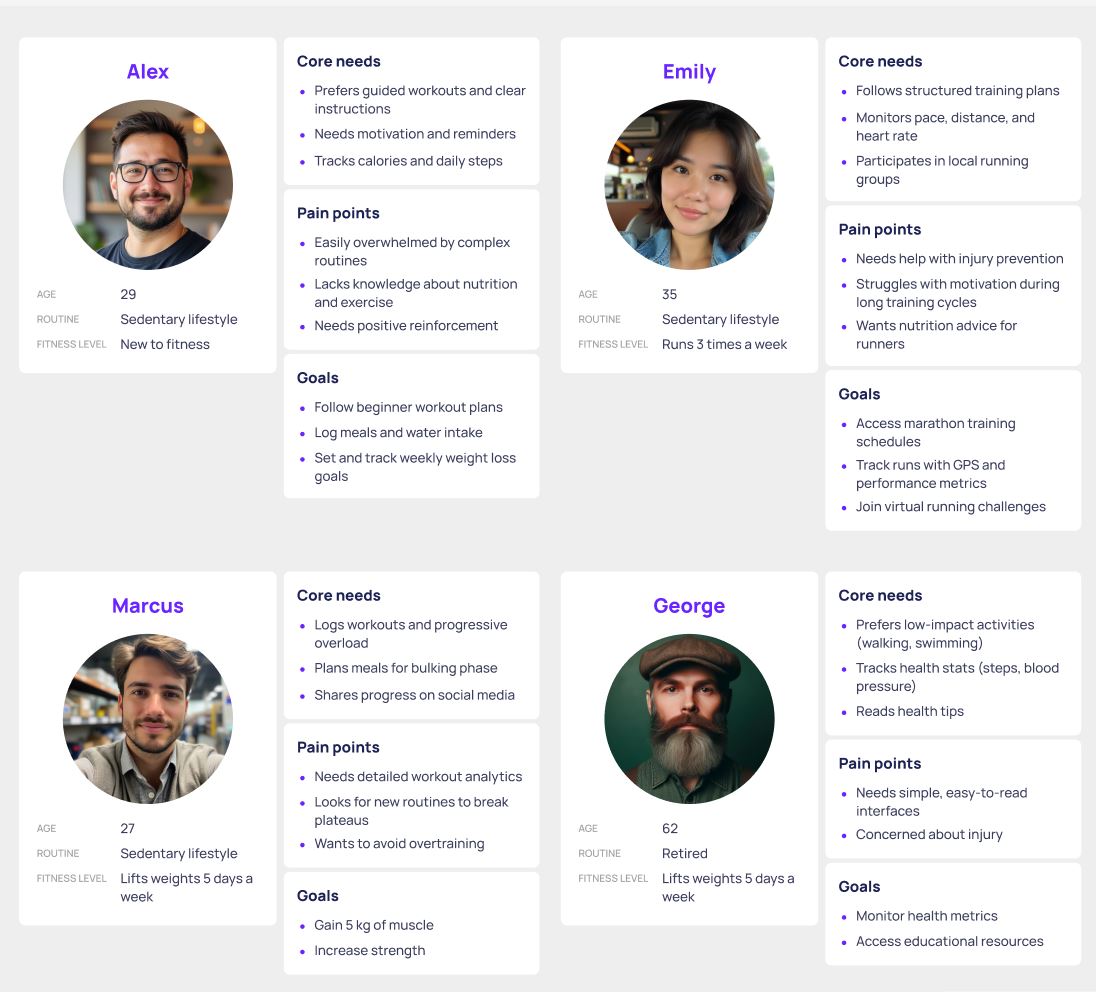
Some of personas created for the project. Simplified for the presentation purposes.
05. Market Analysis
We analyzed top fitness apps by reviewing their features, user interfaces, and use of AI. Our focus was on onboarding, workout recommendations, and progress tracking. We identified common strengths, such as clean design and motivational tools, but also noticed gaps—especially in personalized, adaptive feedback and more holistic view on health. These findings helped us spot opportunities to differentiate our app with smarter, more tailored AI features.
Product Vision
The core goal of our fitness app is to deliver a truly personalized and motivating fitness experience that adapts to each user’s unique needs and goals. At the heart of our value proposition is the promise of accessible, expert-level guidance—anytime, anywhere—empowering users to achieve better results safely and efficiently. By leveraging AI, the app can generate custom workout and nutrition plans, track progress with precision, and provide real-time feedback on form and performance, all tailored to individual fitness levels, preferences, and evolving routines.
AI is central to enhancing the user experience, setting our app apart from traditional fitness solutions. Features like computer vision enable real-time posture correction and instant coaching using only a smartphone camera, while predictive analytics adjust routines and goals based on actual progress and health data.
Seamless integration with wearables, adaptive difficulty, and natural language feedback create a responsive, supportive environment that feels like having a personal coach in your pocket. These differentiators—hyper-personalization, intelligent feedback, and adaptive coaching—position our app as a next-generation fitness solution in a crowded market.
Key Features (MVP)
The MVP includes an AI-powered personalized workout generator that tailors exercise routines to individual needs, a progress dashboard for tracking achievements and milestones, smart reminders to keep users engaged and consistent, and a simple, motivating on-boarding process designed to quickly guide new users into effective fitness habits.
06. User Journey
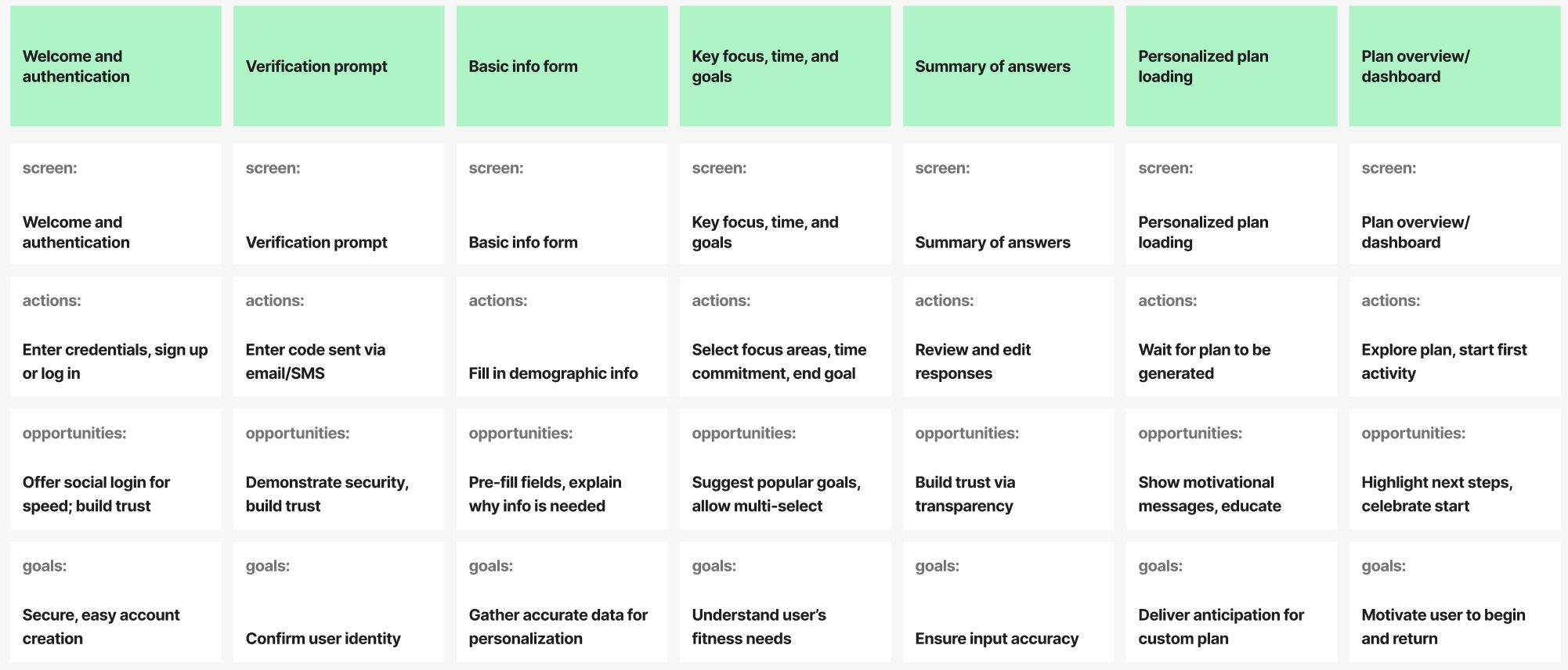
Based on comprehensive user research, we developed a detailed user journey map to identify and address user needs at every stage of their interaction with our product. This journey map enables us to pinpoint pain points, moments of delight, and opportunities for improvement, ensuring a seamless and supportive experience throughout the entire user lifecycle.
Key Objectives
Holistic Understanding: Gain a 360-degree view of user behaviors, motivations, and challenges.
Targeted Support: Identify critical touchpoints where users may need additional guidance, resources, or reassurance.
Continuous Optimization: Use journey insights to inform iterative design improvements and enhance overall usability.
Application in UX/UI Design
Empathy-Driven Solutions: Design features and interactions that directly address user needs uncovered during research.
Proactive Assistance: Integrate contextual help, tooltips, and onboarding flows at key stages to support users proactively.
Feedback Loops: Ensure users have clear channels to provide feedback, allowing us to refine the journey further.
07. Reflections
This project highlighted the critical role of thorough user research in the design process. Although I am personally familiar with similar applications, I realized that my own experiences did not reflect the full spectrum of user behaviors, needs, and expectations. Engaging directly with diverse users uncovered unique perspectives and pain points that I hadn’t previously considered.
This experience reinforced my commitment to incorporating deep user research into every stage of the UX/UI process, ensuring our designs are grounded in genuine user insights rather than assumptions.
Part 2: Prototyping and User Testing is coming soon
P.S. My work is protected by an NDA, so this explanation focuses on my thought process and strategy rather than specific details
Leave a Reply